
Description
OVERVIEW
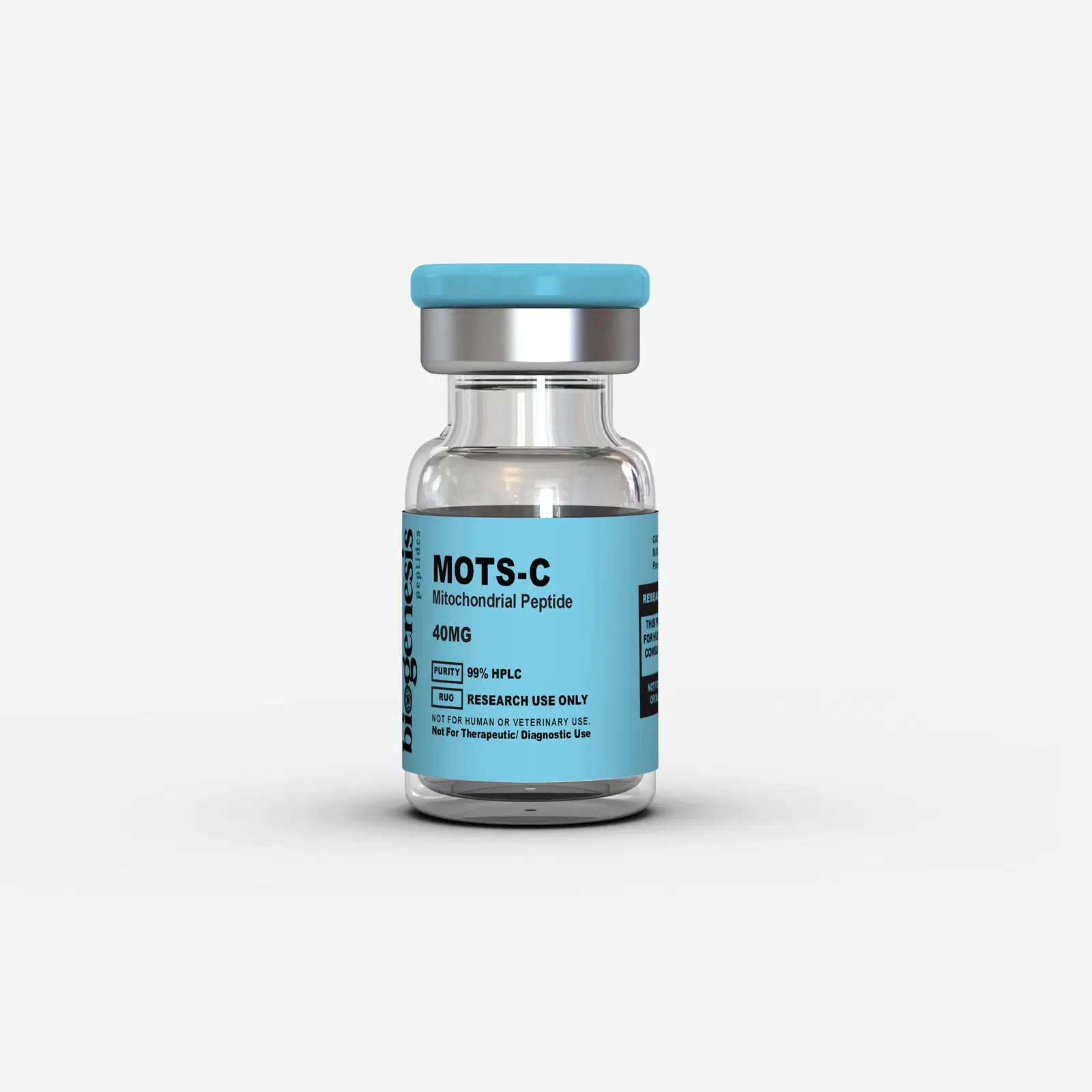
MOTS-c is a mitochondria-derived peptide (MDP) composed of 16 amino acids that plays a critical role in metabolic regulation, mitochondrial function, and cellular stress response. Unlike traditional peptides, MOTS-c is synthesized within mitochondria and translocates to the nucleus, where it regulates gene expression related to energy metabolism and longevity.
Key Benefits of MOTS-c Research:
✔️ Enhances muscle metabolism and exercise capacity
✔️ Promotes fat oxidation and prevents obesity
✔️ Improves insulin sensitivity and helps prevent Type 2 diabetes
✔️ Protects against age-related diseases and enhances longevity
✔️ Supports cardiovascular and bone health
MOTS-c is being actively studied in metabolic disorders, aging research, and mitochondrial medicine.
RESEARCH
1. Muscle Metabolism & Exercise Performance
- MOTS-c enhances AMPK activation, improving glucose uptake in muscle tissue.
- Studies in mice show that MOTS-c increases endurance and muscle recovery post-exercise.
- Potential application: Exercise enhancement, muscle recovery, and metabolic health support.
2. Fat Metabolism & Obesity Prevention
- MOTS-c stimulates brown fat activation, promoting fat oxidation over storage.
- Research indicates that MOTS-c supplementation prevents adipose tissue dysfunction and white fat accumulation.
- Potential application: Obesity treatment, fat metabolism regulation, and ketogenic diet support.
3. Insulin Sensitivity & Diabetes Prevention
- Low MOTS-c levels are correlated with insulin resistance, particularly in obese individuals.
- MOTS-c supplementation enhances glucose metabolism and insulin sensitivity, making it a potential therapy for Type 2 diabetes.
- Potential application: Diabetes prevention, metabolic syndrome treatment, and insulin resistance improvement.
4. Longevity & Aging Research
- MOTS-c levels decline with age, and genetic studies link its variants to exceptional longevity (especially in Japanese centenarians).
- MOTS-c supplementation has been associated with improved mitochondrial function and protection against age-related diseases.
- Potential application: Longevity enhancement, anti-aging therapy, and mitochondrial function support.
5. Cardiovascular Health
- MOTS-c improves endothelial function, reducing inflammation and oxidative stress in blood vessels.
- Clinical research shows lower MOTS-c levels correlate with a higher risk of coronary artery disease.
- Potential application: Cardiovascular disease prevention, blood vessel protection, and heart health improvement.
6. Bone Health & Osteoporosis Prevention
- MOTS-c activates the TGF-β/SMAD signaling pathway, stimulating osteoblast activity and Type I collagen production.
- Studies suggest that MOTS-c enhances bone density and reduces fracture risk.
- Potential application: Osteoporosis prevention and bone regeneration therapy.
7. Metabolic Stress & Mitochondrial Function
- MOTS-c acts as a mitochondrial stress response peptide, regulating nuclear gene expression to counteract metabolic dysfunction.
- It influences glucose metabolism and antioxidant defense, offering protection against metabolic diseases.
- Potential application: Mitochondrial medicine, metabolic disease treatment, and cellular stress response regulation.
STRUCTURE
- Amino Acid Sequence: Met-Arg-Trp-Gln-Glu-Met-Gly-Tyr-Ile-Phe-Tyr-Pro-Arg-Lys-Leu-Arg
- Molecular Formula: C₁₀₁H₁₅₂N₂₈O₂₂S₂
- Molecular Weight: 2174.64 g/mol
- CAS Registry Number: 1627580-64-6
- Synonyms: Mitochondrial Open Reading Frame of the 12S rRNA-c (MT-RNR1), MOTS-c Peptide
CITATIONS
- C. Lee, K. H. Kim, & P. Cohen. MOTS-c: A novel mitochondrial-derived peptide regulating muscle and fat metabolism. Free Radic. Biol. Med. (2016).
- H. Lu et al. MOTS-c peptide regulates adipose homeostasis to prevent ovariectomy-induced metabolic dysfunction. J. Mol. Med. Berl. Ger. (2019).
- K. H. Kim et al. MOTS-c translocates to the nucleus to regulate nuclear gene expression in response to metabolic stress. Cell Metab. (2018).
- S.-J. Kim et al. MOTS-c enhances insulin sensitivity and regulates plasma metabolites. Physiol. Rep. (2019).
- L. R. Cataldo et al. Plasma MOTS-c levels are associated with insulin sensitivity in lean but not obese individuals. J. Investig. Med. (2018).
- N. Che et al. MOTS-c improves osteoporosis by promoting Type I collagen synthesis in osteoblasts via TGF-β/SMAD signaling pathway. Eur. Rev. Med. Pharmacol. Sci. (2019).
- N. Fuku et al. MOTS-c as a key player in exceptional longevity. Aging Cell (2015).
- Q. Qin et al. Downregulation of circulating MOTS-c levels in patients with coronary endothelial dysfunction. Int. J. Cardiol. (2018).
- Y. Yang et al. MOTS-c’s role in cardiovascular disease: Recent updates. Biomed. Pharmacother. (2019).

Reviews
There are no reviews yet.