
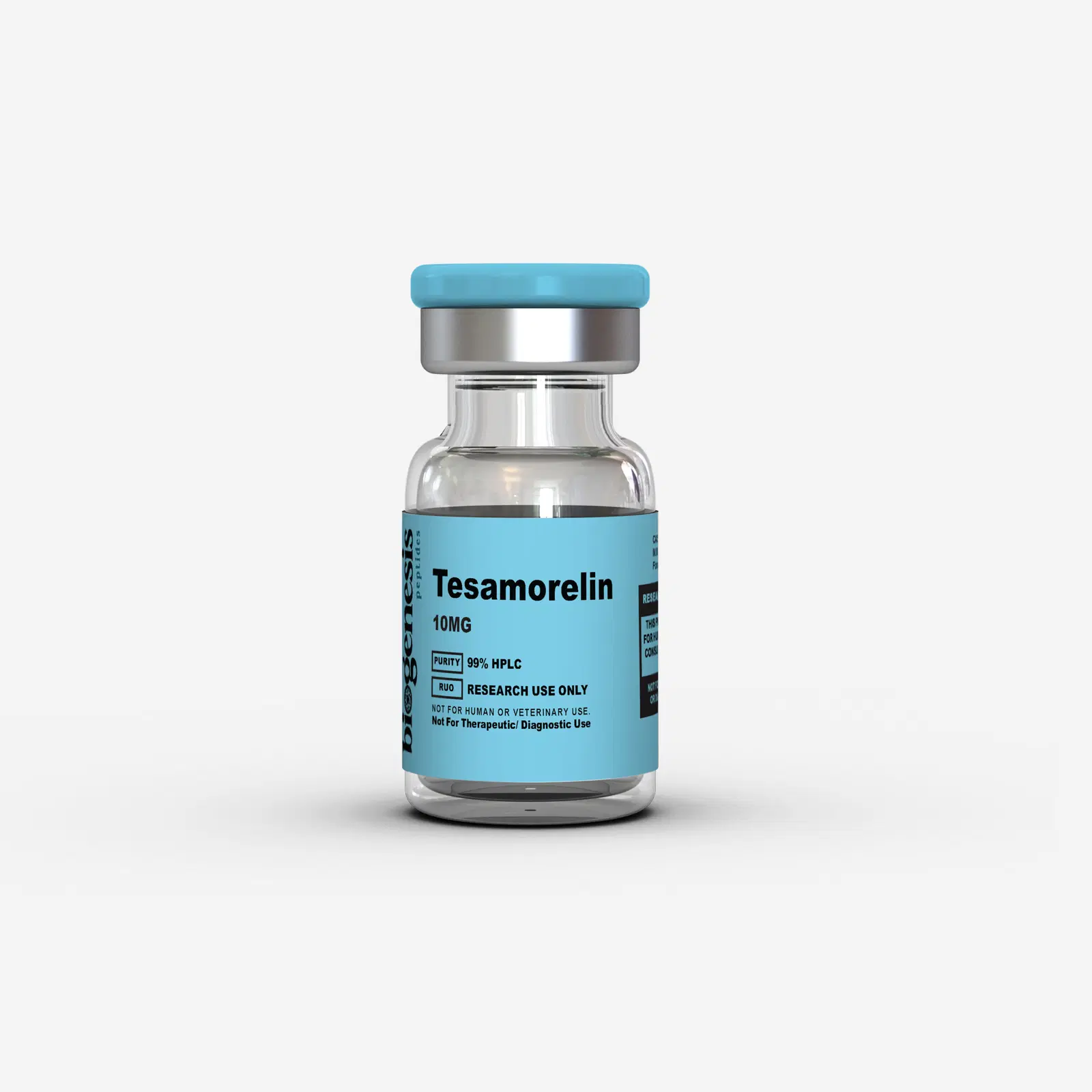
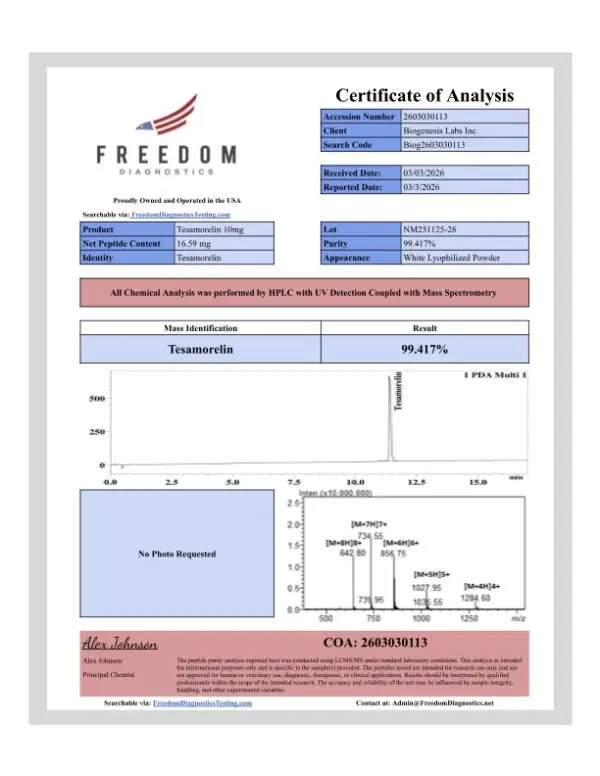
Description
OVERVIEW
Tesamorelin is a synthetic peptide composed of 44 amino acids, designed as a growth-hormone-releasing hormone (GHRH) analogue. It is FDA-approved for the treatment of HIV-associated lipodystrophy, a condition characterized by abnormal fat accumulation. Beyond this application, research suggests Tesamorelin may offer additional therapeutic benefits, including:
- Reducing visceral fat and cardiovascular disease risk in HIV patients.
- Enhancing peripheral nerve regeneration, potentially aiding in nerve injury recovery.
- Improving cognitive function and slowing the progression of mild cognitive impairment (MCI), a precursor to dementia.
- Addressing growth hormone (GH) deficiency in HIV patients, supporting hormonal balance without the risks of direct GH administration.
These potential benefits have made Tesamorelin a subject of ongoing research in metabolic, neurological, and regenerative medicine.
RESEARCH
Tesamorelin and HIV-Associated Lipodystrophy
- Tesamorelin was FDA-approved in 2010 for the treatment of HIV-associated lipodystrophy.
- It reduces visceral adiposity by nearly 20%, making it four times more effective than alternative treatments.
- Potential application: Managing abnormal fat accumulation in HIV patients.
Tesamorelin and Cardiovascular Health
- HIV patients face an increased risk of cardiovascular disease (CVD) due to fat accumulation and side effects of antiretroviral therapy.
- Tesamorelin has been shown to:
- Lower triglycerides, total cholesterol, and non-HDL cholesterol levels.
- Reduce visceral adipose tissue, improving overall metabolic health.
- Decrease systemic inflammation, a major risk factor for CVD.
- Potential application: Metabolic health support and cardiovascular disease prevention.
Tesamorelin and Growth Hormone Deficiency in HIV
- One-third of HIV patients receiving Highly Active Antiretroviral Therapy (HAART) develop growth hormone deficiency, contributing to fat accumulation and metabolic dysfunction.
- Tesamorelin safely increases GH levels, avoiding the risks of direct GH administration, such as edema and GH desensitization.
- Potential application: Hormonal balance and metabolic support in HIV patients.
Tesamorelin and Peripheral Nerve Regeneration
- Nerve damage due to injury, diabetes, or surgery is often difficult to treat.
- Studies suggest GH-based therapies, including Tesamorelin, may accelerate nerve repair and enhance sensory and motor function.
- Potential application: Neurological recovery and nerve regeneration therapy.
Tesamorelin and Cognitive Function
- A large randomized controlled study at the University of Washington found that Tesamorelin enhances cognition in early-stage dementia.
- Key findings include:
- Increased GABA (gamma-aminobutyric acid) levels, supporting brain function and neuroprotection.
- Reduction of myo-inositol, a compound linked to brain aging and cognitive decline.
- Potential application: Neuroprotection and dementia prevention.
STRUCTURE
- Molecular Formula: C₂₂₃H₃₇₀N₇₂O₆₉S
- Molecular Weight: 5195.908 g/mol
- Amino Acid Sequence:
Unk-Tyr-Ala-Asp-Ala-Ile-Phe-Thr-Asn-Ser-Tyr-Arg-Lys-Val-Leu-Gly-Gln-Leu-Ser-Ala-Arg-Lys-Leu-Leu-Gln-Asp-Ile-Met-Ser-Arg-Gln-Gln-Gly-Glu-Ser-Asn-Gln-Glu-Arg-Gly-Ala-Arg-Ala-Arg-Leu - CAS Registry Number: 901758-09-6
CITATIONS
- Clinical Review Report: Tesamorelin (Egrifta). Canadian Agency for Drugs and Technologies in Health(2016).
- A. Mangili, J. Falutz, J.-C. Mamputu, M. Stepanians, and B. Hayward. Predictors of Treatment Response to Tesamorelin, a Growth Hormone-Releasing Factor Analog, in HIV-Infected Patients with Excess Abdominal Fat.PLOS One (2015).
- J. Falutz et al. Metabolic effects of a growth hormone-releasing factor in patients with HIV. N. Engl. J. Med. (2007).
- T. L. Stanley et al. Reduction in visceral adiposity is associated with an improved metabolic profile in HIV-infected patients receiving tesamorelin. Clin. Infect. Dis. Off. Publ. Infect. Dis. Soc. Am. (2012).
- V. Rochira and G. Guaraldi. Growth hormone deficiency and human immunodeficiency virus. Best Pract. Res. Clin. Endocrinol. Metab. (2017).
- S. H. Tuffaha et al. Therapeutic augmentation of the growth hormone axis to improve outcomes following peripheral nerve injury. Expert Opin. Ther. Targets (2016).
- S. D. Friedman et al. Growth hormone-releasing hormone effects on brain γ-aminobutyric acid levels in mild cognitive impairment and healthy aging. JAMA Neurol. (2013).


Reviews
There are no reviews yet.