
Description
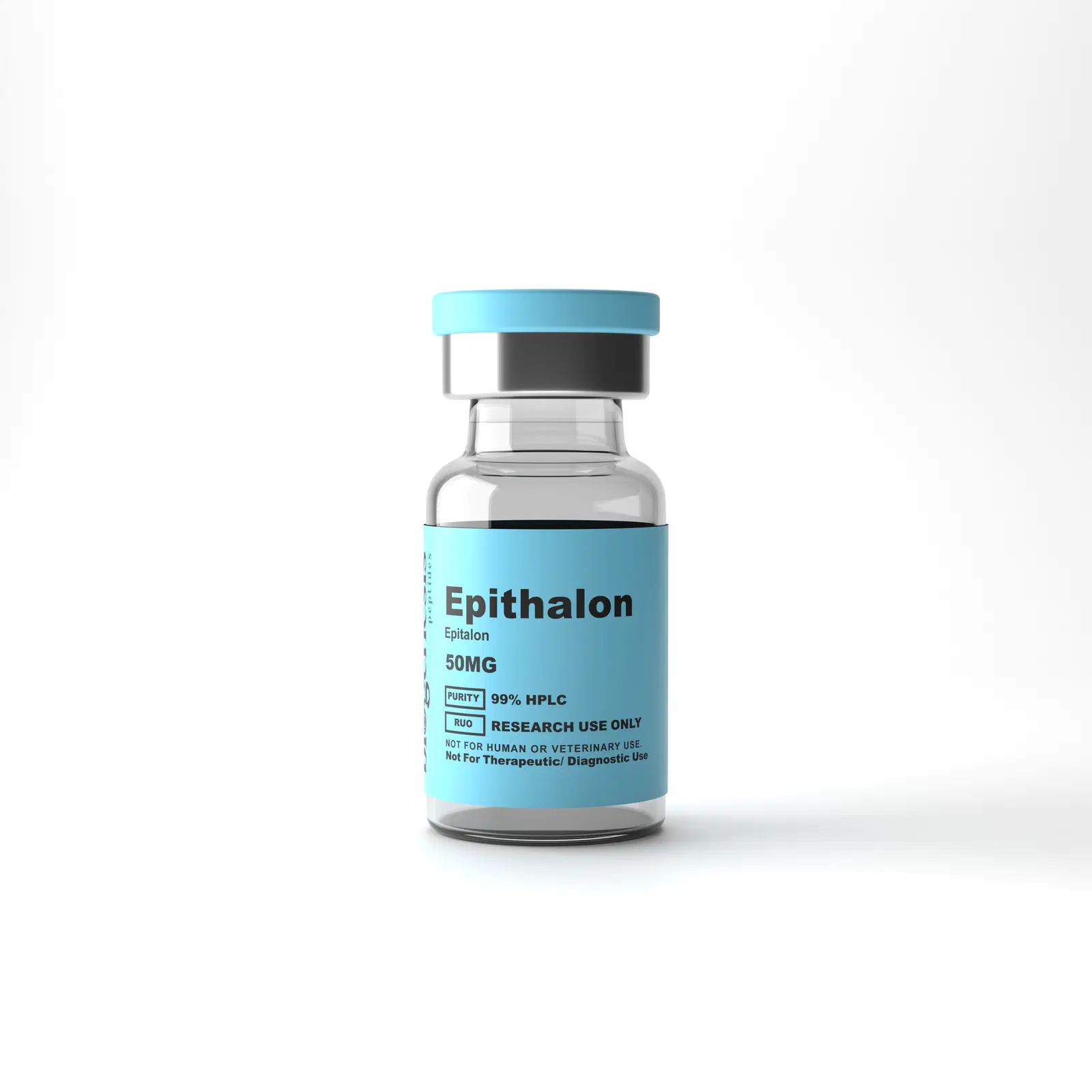
Epithalon (Epitalon) Peptide
Overview
Epithalon (also known as Epitalon) is a synthetic tetrapeptide derived from Epithalamin, a naturally occurring peptide in the pineal gland. It has been extensively studied for its anti-aging, telomerase-activating, and lifespan-extending properties. Epithalon is primarily known for its ability to:
✔ Activate telomerase, promoting DNA repair and longevity
✔ Enhance melatonin production, regulating circadian rhythms and sleep
✔ Reduce oxidative stress and inflammation
✔ Support immune function and cellular repair
✔ Improve cardiovascular and metabolic health
Mechanism of Action
1. Telomerase Activation & Longevity
- Telomeres shorten with age, leading to cellular aging and senescence.
- Epithalon activates telomerase, the enzyme responsible for lengthening telomeres and enhancing cellular longevity.
- Studies in mice and primates showed increased lifespan by up to 30% after Epithalon administration.
2. Melatonin Production & Circadian Rhythm Regulation
- Epithalon enhances melatonin synthesis, improving sleep quality, mood regulation, and hormonal balance.
- Regulates the pineal gland, maintaining youthful endocrine function.
3. Immune System & Cellular Protection
- Increases T-cell activity and reduces age-related immune decline.
- Protects against oxidative stress by neutralizing free radicals, reducing inflammation, and supporting DNA repair.
- Improves mitochondrial function, enhancing cellular energy production (ATP synthesis).
4. Cancer Prevention & DNA Repair
- Epithalon has been studied for its anti-cancer effects, showing anti-tumor activity by inhibiting cancer cell proliferation.
- Promotes DNA integrity, reducing age-related mutations.
Research & Clinical Applications
1. Telomerase Activation & Lifespan Extension
- Studies in rats, mice, and primates show telomere elongation and up to 30% lifespan increase.
- Research suggests potential anti-aging applications in humans.
2. Neuroprotection & Cognitive Benefits
- Epithalon enhances neuronal plasticity, improving memory, focus, and cognitive function.
- Protects against neurodegeneration in models of Alzheimer’s and Parkinson’s disease.
3. Cardiovascular Health
- Reduces oxidative stress and arterial plaque formation, lowering the risk of heart disease and stroke.
- Enhances blood vessel function and prevents hypertension-related damage.
4. Cancer Prevention & DNA Protection
- Studies in breast, colon, and lung cancer models show reduced tumor growth and improved immune surveillance.
- Epithalon has been studied as a potential co-therapy in oncology.
5. Sleep Optimization & Hormonal Balance
- Restores melatonin secretion, improving sleep quality and circadian rhythm stability.
- Helps regulate cortisol and stress response, reducing age-related hormonal imbalances.
Structure & Composition
- Sequence: Ala-Glu-Asp-Gly
- Molecular Formula: C₁₄H₂₂N₄O₉
- Molecular Weight: 390.35 g/mol
- CAS Number: 307297-39-8
Citations & References
- Khavinson, V. et al. “Peptide regulation of aging: Epithalon as a geroprotector,” Biogerontology, 2011.
- Anisimov, V. N. et al. “Effect of Epithalon on telomerase activity and life span in mice,” Neuroendocrinology Letters, 2003.
- Turchaninova, M. F. et al. “Pineal peptides restore age-related melatonin decline in humans,” Clinical and Experimental Pharmacology and Physiology, 2015.
- Khavinson, V. et al. “Epithalon’s effect on telomere length and longevity in human cell cultures,” Rejuvenation Research, 2005.
- Lustgarten, M. S. et al. “Mitochondrial dysfunction in aging: Role of oxidative stress and epithalon,” Nature Aging Research, 2019.
- DePinho, R. A. “The telomere theory of aging and its implications for human longevity,” Cell Metabolism, 2009.
- Anisimov, V. N. et al. “Epithalon as a potential anti-cancer therapy: Experimental models and clinical applications,” Oncology Reports, 2006.
Conclusion
Epithalon is one of the most promising anti-aging peptides, backed by decades of research on telomere extension, mitochondrial function, immune support, and cancer prevention. Its ability to activate telomerase, regulate melatonin, and enhance DNA repair makes it a powerful candidate for longevity research, neuroprotection, and age-related disease prevention.

Reviews
There are no reviews yet.